Resident Wellness

Penn Medicine Dermatology has created and maintains a supportive environment that is achieved through periodic fun and team building events.

.

.

Learn More

Support Resident Wellness

Community Outreach

The Penn Academy for Skin Health (PASH) program provides local 10th – 12th grade students a hands on learning and laboratory experience with Penn faculty.  Participants also learn about careers in both research and medicine.

.
.

Learn More

Support Community Outreach

Research

Penn Medicine Dermatology supports research through its Penn Skin Biology and Diseases Resource-based Center (SBDRC) program. The SBDRC offers its members educational opportunities, mentoring and seed funding. Through its community outreach program students in Philadelphia learn and work directly with Penn Faculty. Additional Core services are available to members.
.

Learn More

Support Research

Education

Our mission is to educate and train future leaders in the field of dermatology. We aim to foster and support excellence in the clinical care of patients from all walks of life and diverse backgrounds; promote life-long learning, and advance education and teaching across the field. Penn Dermatology introduces and involves residents in cutting-edge basic and translational research.
.

Learn More

Support Education

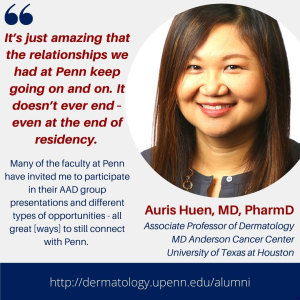
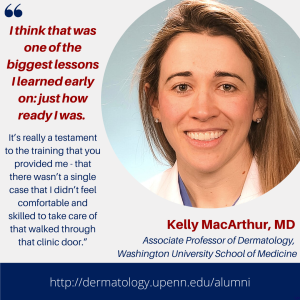
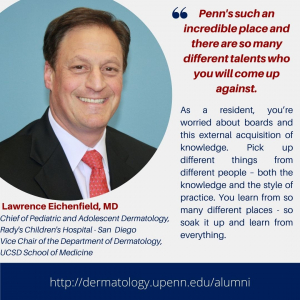
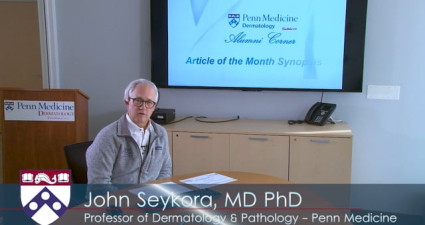
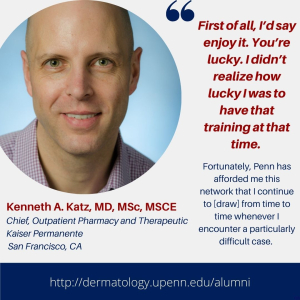
Clinical Pearls

Alumni share their clinical pearls

Watch now!

You can make a difference!

You can make a direct difference by supporting Community Outreach, Resident Wellness and Penn Medicine Dermatology Research.
.
.

.

.

Learn More

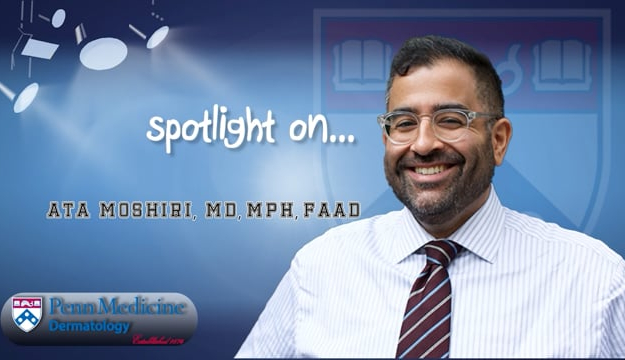
Spotlight On . . .

Dr. Moshiri is a dermatologist and dermatopathologist with expertise in high risk skin cancer surveillance and treatment. His primary focus at this time is clinical dermatopathology, where he serves as the laboratory operations director of a high volume academic dermatopathology service responsible for approximately 100,000 specimens/year, generating well over $12 million per year in net receipts .He is also in the process of starting a clinic focused on delivering oncolytic viral therapy to patients with treatment-refractory melanoma and other skin cancers.

Find us on Facebook!

Featured Article

Cutaneous squamous cell carcinoma (cSCC) is the second most common cancer among Caucasians, with estimates of approximately 1.1 million new cases annually in the US [1,2].
While outcomes are favorable for most patients, and the vast majority of cSCCs are cured with complete excision, an estimated 3–7% of patients develop metastases that lead to
significant morbidity and mortality [2–4]. Thus, early diagnosis and treatment of cSCCs, and their premalignant precursors, is crucial to minimize morbidity and conserve healthcare
resources.

LINK TO ARTICLE

Verified by MonsterInsights